12 August 2026 · Graphene Coating · Explained
What Is Graphene Coating and How Does It Work?
Graphene coating is a nano-scale protective layer applied directly to a car's paint, glass, and plastic surfaces. It bonds chemically rather than sitting on top of the surface — making it far more durable than wax, paint sealant, or older ceramic coating technologies.
The Science: What Is Graphene?
Graphene is a single-atom-thick layer of carbon atoms arranged in a hexagonal lattice. It was first isolated in 2004 at the University of Manchester and is considered one of the strongest materials ever discovered — roughly 200 times stronger than steel by weight. When graphene particles are suspended in a ceramic coating matrix, they dramatically improve the coating's mechanical strength, thermal management, and electrostatic properties.
How Is Graphene Coating Applied?
- —Stage 1: Full decontamination — iron remover, tar remover, clay bar decontamination
- —Stage 2: Paint correction — polishing to remove swirl marks, scratches, and oxidation
- —Stage 3: Panel wipe — IPA (isopropyl alcohol) wipe to strip any remaining polish residue
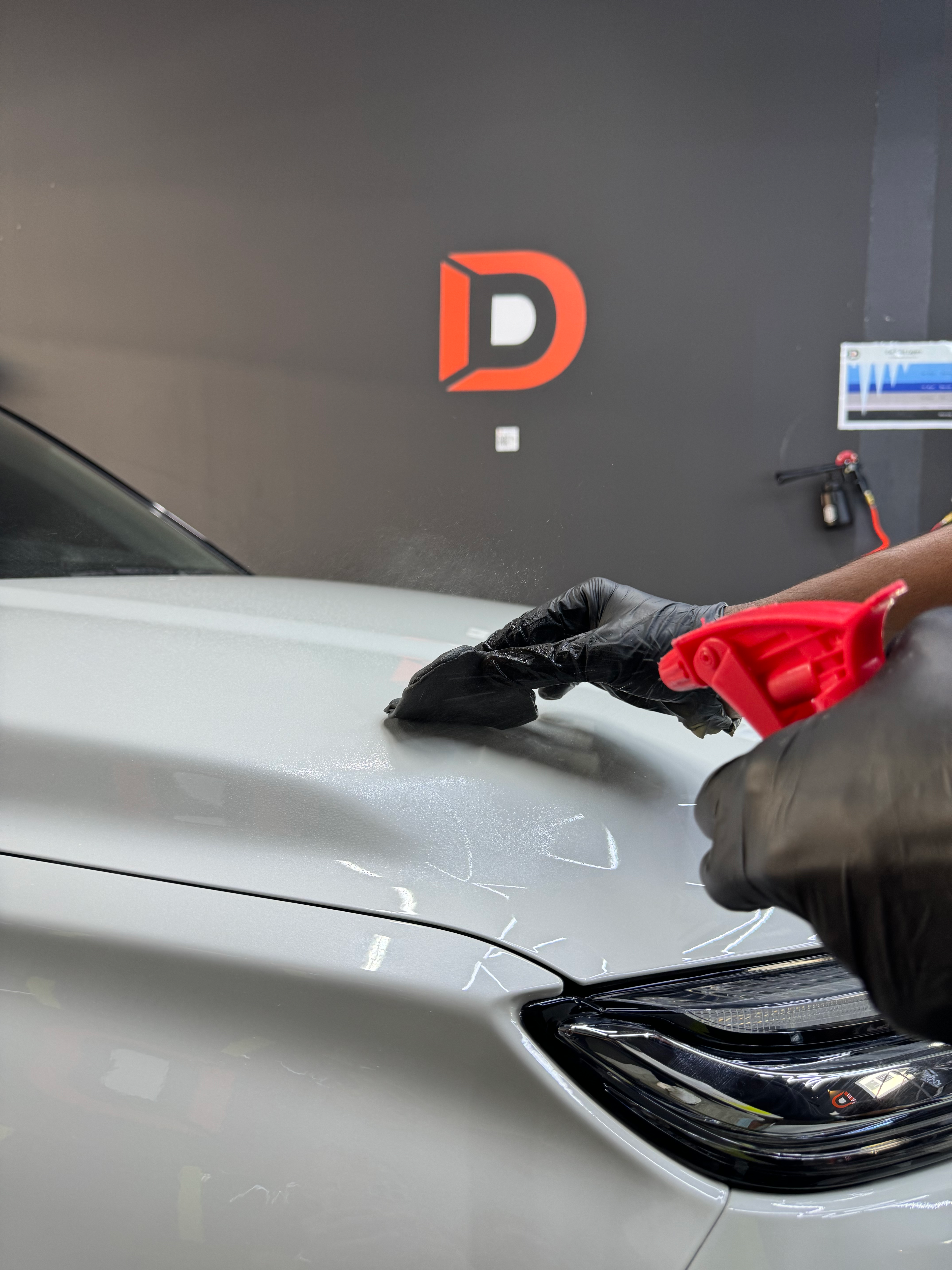
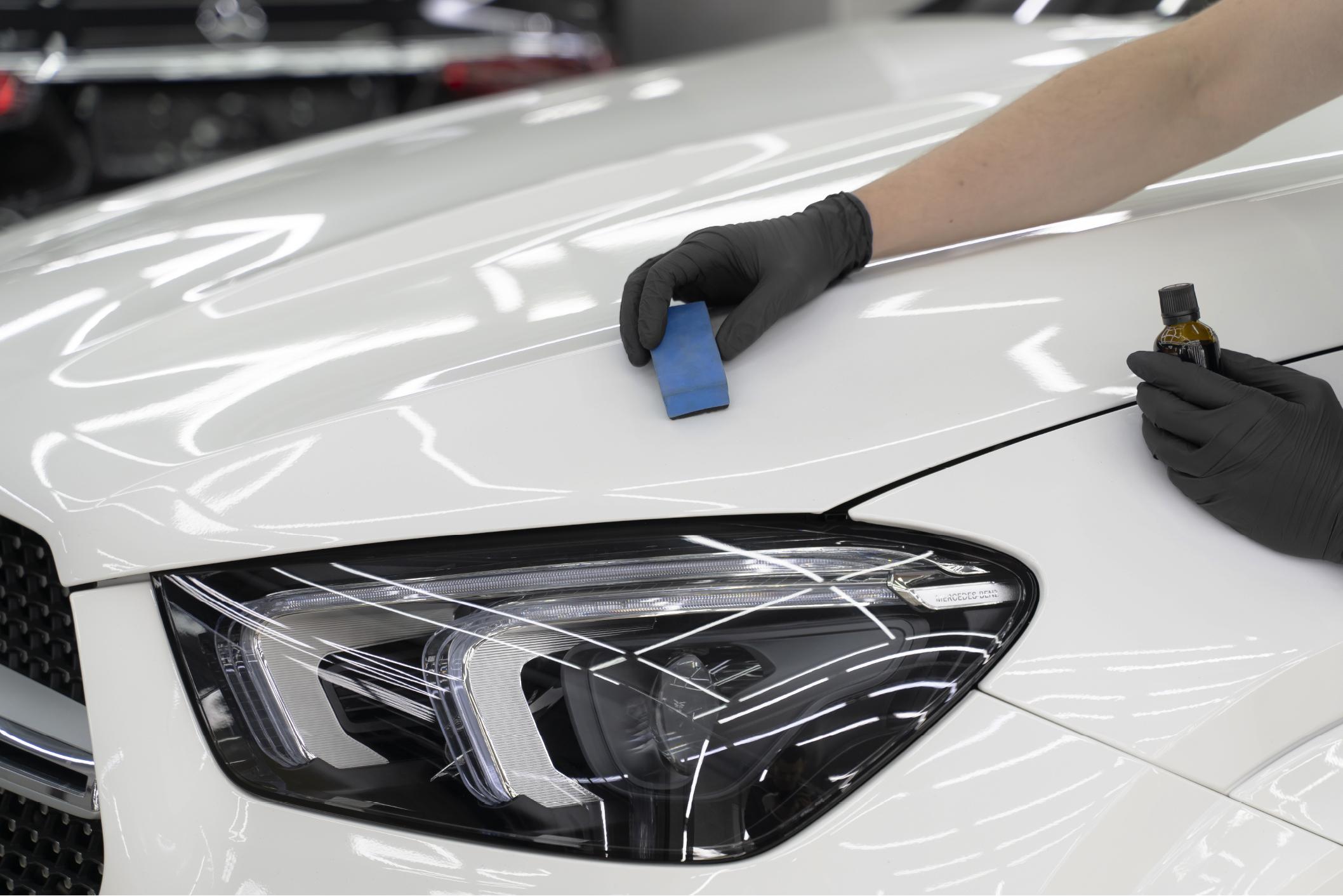
- —Stage 4: Coating application — panel by panel in a dust-controlled environment
- —Stage 5: Flash and level — each panel is allowed to flash before buffing to a level surface
- —Stage 6: Cure time — 24–48 hours in a controlled environment before the vehicle is released
What Graphene Coating Actually Protects Against
A graphene coating protects against UV oxidation (fading and dulling of paint), water spotting from mineral-rich water, light surface contaminants (bird droppings, tree sap, industrial fallout), swirl marks from improper washing, and the general aging effects of heat and environmental exposure. It does not protect against stone chips, deep scratches, or panel damage — that requires PPF.
Graphene Coating vs Wax vs Sealant vs Ceramic: The Hierarchy
- —Wax: 1–3 months durability, zero chemical resistance, requires reapplication every few weeks in Dubai heat
- —Paint sealant: 3–6 months, moderate hydrophobics, no hardness protection
- —Ceramic coating: 2–4 years, 9H hardness, good hydrophobics — but struggles with Dubai heat and dust
- —Graphene coating: 3–5 years, 9H–10H hardness, superior heat management, anti-static properties
- —PPF: 7–10 years, physical impact protection — the only option that prevents stone chips
Frequently Asked Questions
Does graphene coating change how my car looks?
Yes — in a positive way. It adds depth and gloss to the paint, making colour appear richer and more saturated. The effect is subtle on light metallic colours and more dramatic on dark solid colours.
Can I apply graphene coating myself?
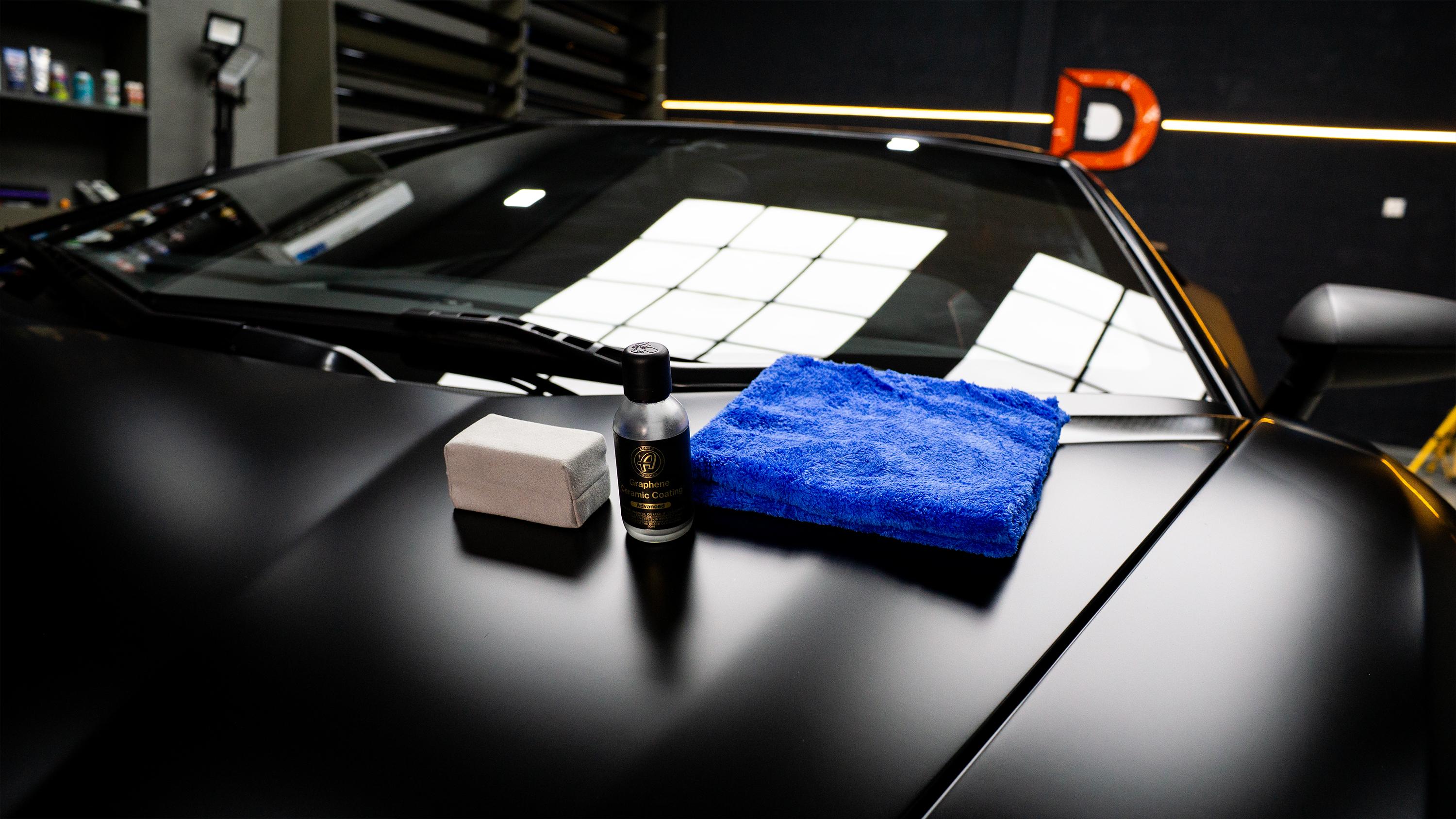
Consumer-grade graphene spray products exist but are fundamentally different from professionally applied coatings. They contain lower concentrations of actual graphene, require no cure time, and last weeks rather than years. Professional application requires the preparation stages described above — without them, the coating cannot bond properly.
Does graphene coating affect resale value?
Yes. A well-documented graphene coating applied to a properly corrected paint surface is a genuine selling point in the Dubai used-car market. It signals the car was properly maintained and protects the paint's showroom condition.
Questions about your own car?
Ask on WhatsApp