18 February 2026 · Interior Detailing · Car Detailing · Dubai
Interior Car Detailing in Dubai: What's Included and Why It Matters
Interior detailing in Dubai is not a luxury — it is maintenance. Dubai's fine sand infiltrates every seam, vent, and crevice of a car's interior. UV through the windscreen degrades dashboards, leather, and plastics at an accelerated rate. And temperatures that regularly reach 70–80 °C inside a parked car cause cracking, fading, and off-gassing of materials that were not designed for continuous extreme heat exposure.
- —Leather seats: UV and heat cause cracking and fading without conditioning treatment every 3–6 months
- —Dashboard and trim: UV yellowing and cracking of plastics begins within 2–3 years without UV protection
- —Carpets and floor mats: Dubai sand accumulates in fibres that standard vacuuming does not reach
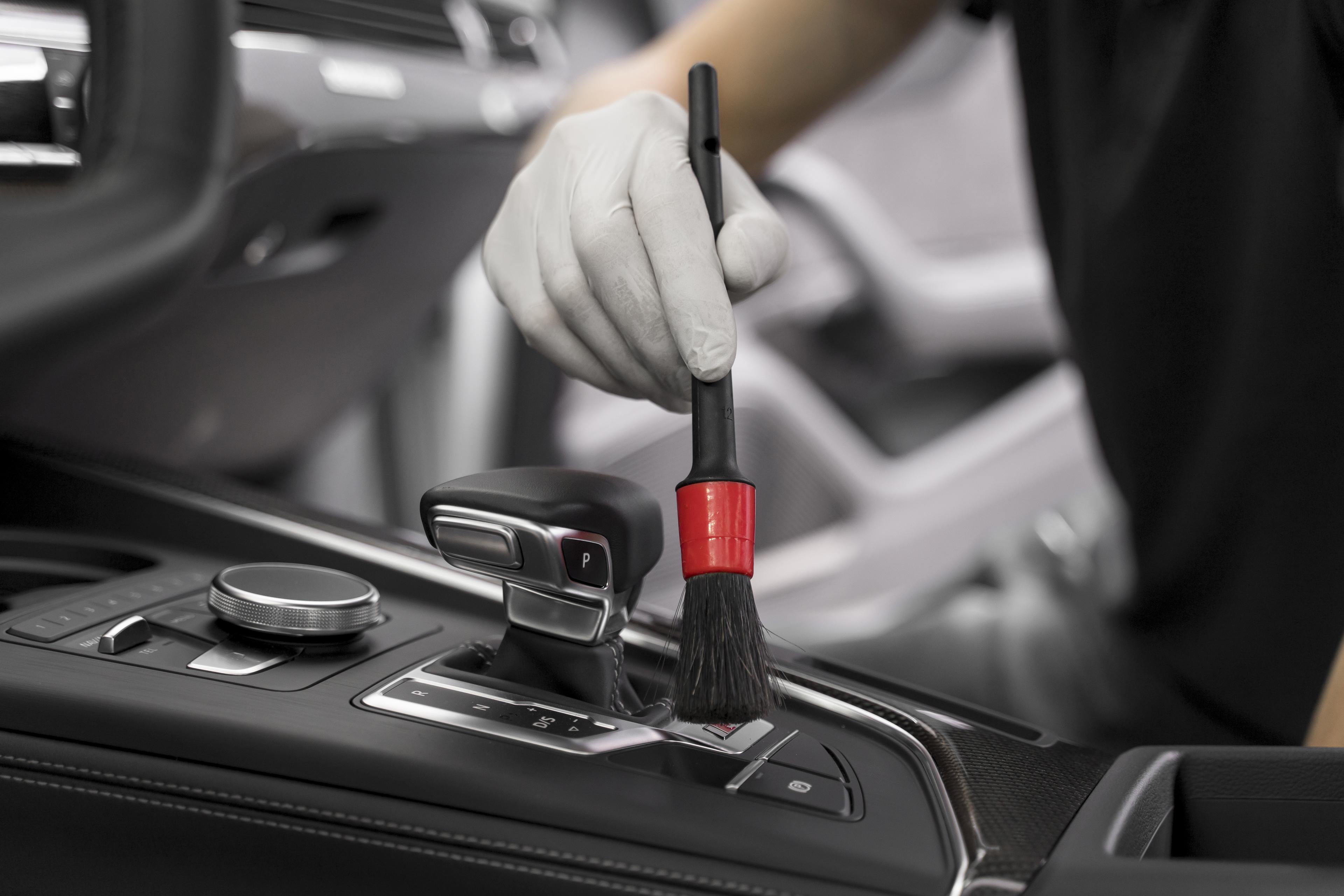
- —Air vents: Sand and dust accumulates in the HVAC system — compressed air and detailing brushes required
- —Headliner: Sunroof cars and convertibles accumulate significant dust on the headliner fabric
What a Professional Interior Detail Includes
- —Full vacuum: high-powered extraction including under seats, seat rail slots, and boot
- —Compressed air blow-out: vents, seat seams, console gaps — removes sand vacuum cannot reach
- —Steam cleaning: seats, carpets, and mats using high-temperature steam for deep sanitisation
- —Leather treatment: pH-neutral leather cleaner, followed by conditioner with UV protection
- —Dashboard and trim wipe: all surfaces with UV-protective interior dressing
- —Glass cleaning: all interior glass surfaces with ammonia-free cleaner
- —Odour treatment: ozone treatment or enzyme-based odour elimination if required
Leather Care in Dubai's Climate
Dubai's combination of UV radiation and extreme heat is the most damaging environment for automotive leather. Untreated leather exposed to 70+ °C in direct summer sun loses moisture rapidly — the proteins in the leather fibres degrade, causing the characteristic cracking and flaking of neglected leather interiors. A UV-blocking leather conditioner applied every 3–6 months replaces lost moisture and creates a barrier against UV penetration. This prevents cracking entirely if started early and maintained consistently.
Interior Protection Products Worth Using
- —Windscreen sunshade: reduces interior temperature by 15–25 °C — the single most impactful interior protection measure
- —UV-protective leather conditioner: prevents cracking and UV fading on all leather surfaces
- —Dashboard UV protectant: matte-finish UV spray for plastic and vinyl — not the greasy high-gloss products
- —Car seat covers for daily drivers: protects leather seat bolsters from denim dye transfer — common in Dubai's heat
Frequently Asked Questions
How often should I have the interior professionally detailed?
Every 6 months for daily drivers in Dubai. Sand penetrates deeply enough that a comprehensive blow-out, steam, and treatment is not replaceable with regular vacuuming alone.
Can interior detailing remove the smell of smoke or pets?
Standard detailing significantly reduces most odours. Deeply embedded smoke odour requires ozone treatment — a machine that generates ozone gas inside the sealed car, which oxidises odour-causing molecules. This is available as an add-on service. Pet odour in heavily soiled carpets may require extraction and enzyme treatment first.
Questions about your own car?
Ask on WhatsApp